प्रकटीकरण: इस लेख में कुछ लिंक एफिलिएट हैं; इनसे खरीदारी पर हमें कमीशन मिल सकता है, आपकी लागत नहीं बढ़ती। विवरण
Disclosure: This page may contain affiliate links. If you buy through them, we may earn a commission at no extra cost to you.
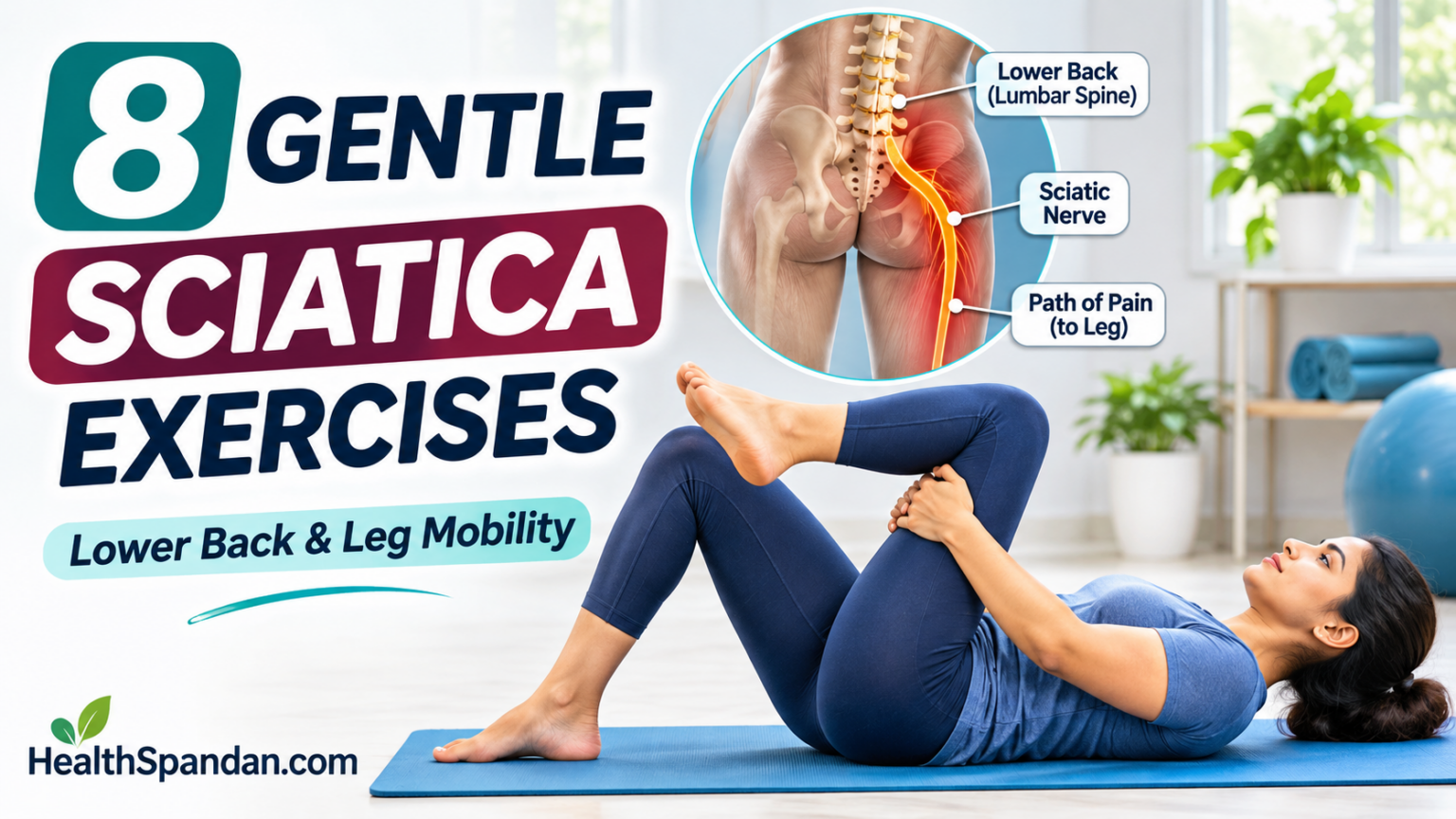
Sciatica exercises A sharp, burning or tingling pain that starts in your lower back or buttock and runs down your leg can make even sitting or walking uncomfortable. This pattern is often called sciatica, and it is more common than many people think.
The good news is that for many people, gentle movement can help calm symptoms and keep the back and hips mobile. The key word is gentle. The wrong movement at the wrong time can make things worse.
In this guide you will learn what sciatica is, 8 gentle sciatica exercises to discuss with your doctor or physiotherapist, which movements to avoid, and the warning signs that need urgent medical attention.
Important: This article is for general education only. Sciatica has different causes, and the right exercises depend on yours. Please check with a doctor or physiotherapist before starting.
What Is Sciatica?
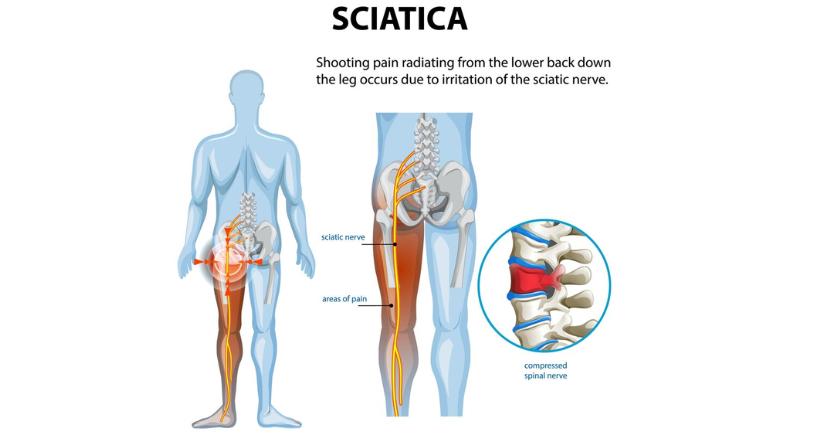
The sciatic nerve is the longest nerve in the body. It starts in the lower back, passes through the buttock and runs down the back of each leg. Sciatica is the term for pain, tingling, numbness or weakness along the path of this nerve, usually on one side.
Common causes include:
- A herniated or slipped disc pressing on a nerve root
- Spinal stenosis (narrowing of the spinal canal)
- Piriformis tightness, where a deep buttock muscle irritates the nerve
- Muscle strain or poor posture over a long time
Because causes differ, a doctor can help work out what is behind your symptoms.
Before You Start: The “Go Gently” Rules
- Move slowly and never force a stretch.
- A mild stretching feeling is okay. Sharp, shooting or worsening leg pain is not. Stop if it happens.
- Avoid bouncing or jerky movements.
- Breathe normally and do not hold your breath.
- Start with 1–2 rounds and build up slowly if it feels comfortable.
- If pain, numbness or tingling spreads further down the leg during an exercise, stop and speak to a professional.
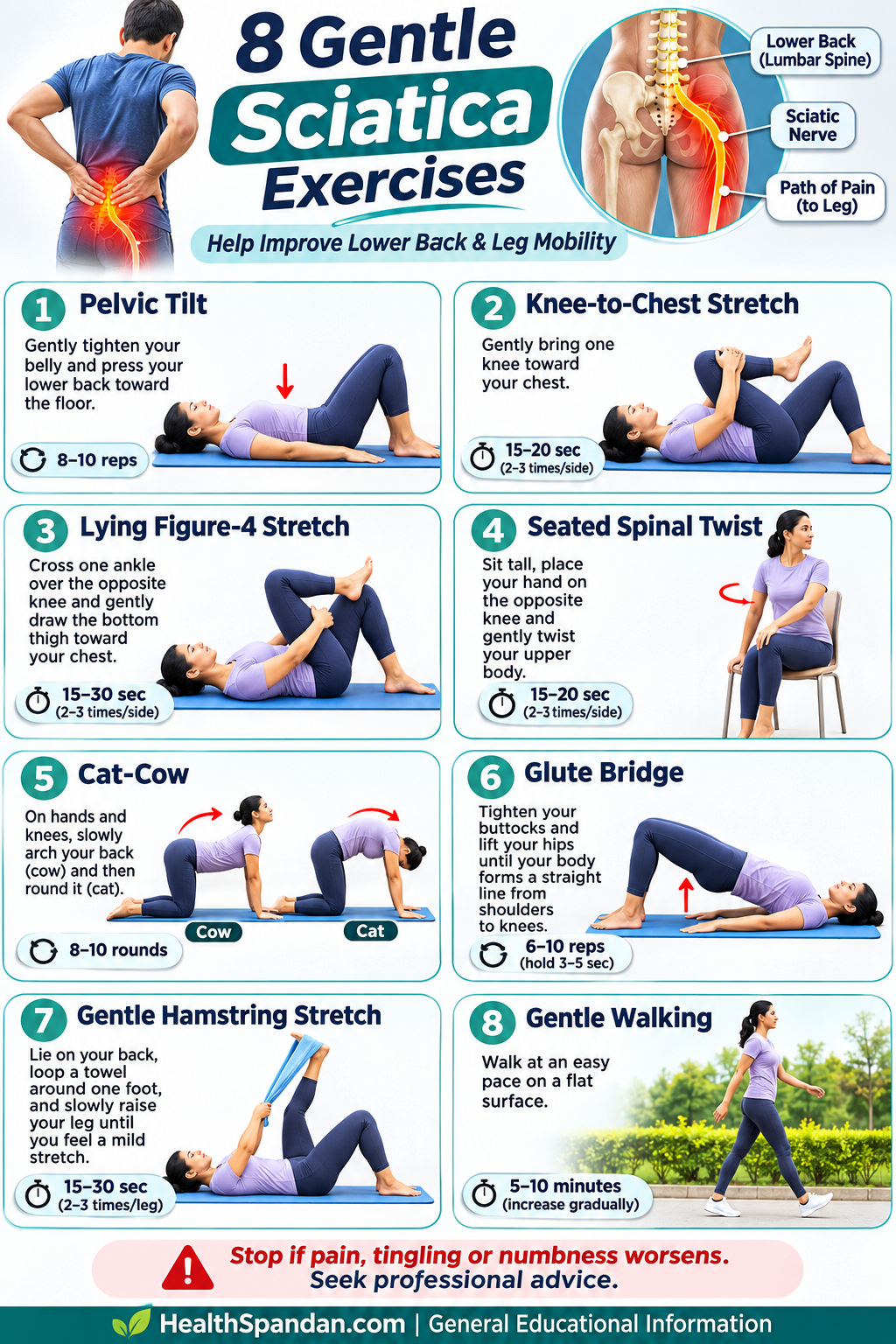
8 Gentle Sciatica Exercises
Hold times and repetitions below are general examples. Your clinician may suggest different ones for you.
1. Pelvic Tilt
How to do it:
- Lie on your back with knees bent and feet flat on the floor.
- Gently tighten your belly and press your lower back toward the floor.
- Hold for about 5 seconds, then relax.
- Repeat 8–10 times.
Why it helps: It wakes up the deep core muscles that support the spine, using very little movement.
Stop if: You feel leg pain or tingling increase.
2. Knee-to-Chest Stretch
How to do it:
- Lie on your back with knees bent.
- Gently bring one knee toward your chest, holding behind the thigh.
- Hold 15–20 seconds, then switch sides.
- Repeat 2–3 times per side.
Why it helps: It gently stretches the lower back and buttock muscles.
Stop if: Pain shoots down the leg. Try a smaller movement or skip it.
3. Lying Figure-4 Stretch (Piriformis Stretch)
How do it:
- Lie on your back with knees bent.
- Cross one ankle over the opposite knee, making a “4” shape.
- Gently draw the bottom thigh toward your chest until you feel a stretch in the buttock.
- Hold 15–30 seconds, then switch sides. Repeat 2–3 times.
Why it helps: It stretches the piriformis and other deep hip muscles that can feel tight with sciatica.
Stop if: You feel sharp pain or increased numbness.
4. Seated Spinal Twist
How to do it:
- Sit tall on a chair with feet flat on the floor.
- Place your right hand on your left knee and gently turn your upper body to the left.
- Hold 15–20 seconds, then switch sides.
- Repeat 2 times per side.
Why it helps: It encourages gentle spinal mobility without lying on the floor, which is useful at work.
Stop if: The twist triggers leg pain.
5. Cat-Cow
How to do it:
- Start on hands and knees, wrists under shoulders, knees under hips.
- Slowly arch your back and look up (cow), then round your back and tuck your chin (cat).
- Move slowly with your breath for 8–10 rounds.
Why it helps: It gently moves the whole spine and can ease stiffness.
Stop if: Knees or wrists hurt, or leg symptoms increase. A cushion under the knees can help.
6. Glute Bridge
How to do it:
- Lie on your back with knees bent and feet hip-width apart.
- Tighten your buttocks and lift your hips until your body forms a straight line from shoulders to knees.
- Hold 3–5 seconds, then lower slowly.
- Repeat 6–10 times.
Why it helps: It strengthens the glutes and back muscles that support the pelvis and spine.
Stop if: You feel pain in the lower back or leg. Do not over-arch.
7. Gentle Hamstring Stretch
How to do it:
- Lie on your back and loop a towel or strap around one foot.
- Keep the knee slightly bent and slowly raise the leg until you feel a mild stretch behind the thigh.
- Hold 15–30 seconds, then switch sides.
- Repeat 2–3 times per leg.
Why it helps: Tight hamstrings can pull on the pelvis and add strain to the lower back.
Stop if: You feel nerve-type pain, tingling or burning. Do not push the leg higher.
8. Sciatica exercises Gentle Walking
How to do it:
- Sciatica exercises Walk at an easy pace on a flat surface for 5–10 minutes.
- Increase time gradually as you feel comfortable.
Why it helps: Light movement keeps the body active and avoids long periods of stiffness. Many guidelines favour staying gently active over complete bed rest.
Stop if: Walking clearly worsens leg pain or causes weakness.
Note on nerve glides: Some physiotherapists teach “nerve gliding” exercises. These should only be done after a clinician has examined you and shown you the right technique.
Quick Reference Table
| Exercise | Typical Time | Stop If |
|---|---|---|
| Pelvic tilt | 8–10 reps | Leg pain increases |
| Knee-to-chest | 15–20 sec × 2–3 | Pain shoots down leg |
| Figure-4 stretch | 15–30 sec × 2–3 | Sharp pain or numbness |
| Seated twist | 15–20 sec × 2 | Twist triggers leg pain |
| Cat-cow | 8–10 rounds | Leg symptoms increase |
| Glute bridge | 6–10 reps | Back or leg pain |
| Hamstring stretch | 15–30 sec × 2–3 | Burning or tingling |
| Gentle walking | 5–10 min | Pain or weakness worsens |
Movements to Avoid (Unless Your Doctor Says Otherwise)
| Better to Avoid | Why |
|---|---|
| Deep forward bends and toe touches | Can increase pressure on the lower back |
| Straight-leg sit-ups | Can strain the lower back |
| Heavy lifting or twisting while lifting | Can aggravate symptoms |
| High-impact exercise such as running or jumping during a flare-up | Repeated jarring may irritate the nerve |
| Sitting for very long periods | Can increase pressure on the lower back and buttock |
Daily Habits That May Help
- Take sitting breaks: Stand up and move every 30–45 minutes.
- Support your lower back: Use a small rolled towel or lumbar cushion when sitting.
- Lift smart: Bend your knees, keep the load close to your body, and avoid twisting.
- Sleep position: Many people find comfort lying on the side with a pillow between the knees, or on the back with a pillow under the knees.
- Stay gently active: Short, regular walks are often better than long rest.
When to See a Doctor
See a doctor if sciatica lasts more than a few weeks, keeps coming back, or is getting worse despite self-care.
Seek urgent medical help immediately if you have:
- Loss of control of the bladder or bowel
- Numbness in the groin or inner thighs (“saddle” area)
- Sudden or severe weakness in a leg or foot
- Severe pain after a fall or injury
- Fever together with back pain
These can be signs of a serious condition that needs prompt treatment.
Frequently Asked Questions
Q1. How often should I do sciatica exercises?
Many routines suggest a short session once or twice a day, but the right amount varies. A doctor or physiotherapist can give a plan suited to your condition.
Q2. Can I do sciatica exercises in bed?
Yes, several of the exercises above (pelvic tilt, knee-to-chest, figure-4 stretch, glute bridge) are done lying on your back and can be done on a firm bed or mat.
Q3. Should I rest completely if I have sciatica?
Long bed rest is generally not recommended for most people. Short rests are fine, but gentle movement is usually encouraged unless your doctor advises otherwise.
Q4. How long does sciatica last?
It varies a lot from person to person. Some people improve within weeks, while others have longer-lasting symptoms. A doctor can give you a better idea based on the cause.
Q5. Is walking good for sciatica?
For many people, gentle walking is helpful. If it clearly worsens your pain, stop and seek advice.
Q6. Which exercises should I avoid?
Deep forward bends, straight-leg sit-ups, heavy lifting and high-impact activity are commonly advised against during flare-ups. Follow your clinician’s advice.
Q7. Do I need a scan before exercising?
Not always. Many cases are assessed by examination alone. Your doctor will decide whether tests are needed.
Conclusion
Sciatica can be painful and frustrating, but gentle, regular movement is often an important part of managing it. The 8 sciatica exercises above focus on easy mobility, light strengthening and stretching. Start slowly, listen to your body, and stop if pain sharpens or spreads.
Most importantly, get your symptoms checked by a doctor or physiotherapist so that your plan matches the cause of your pain, and seek urgent help if you notice any red-flag symptoms.
👉 Save this guide and share it with someone who has lower back or leg pain.
Medical Disclaimer: This article is for general educational purposes only and is not medical advice, diagnosis or treatment. Exercise suitability depends on your individual condition. Please consult a qualified doctor or physiotherapist before starting any exercise programme, especially if you have severe, persistent or worsening pain.