
General health information for education. This article is original educational content and is not a substitute for a diagnosis or advice from a qualified healthcare professional.
- Liver cirrhosis is a long-term condition in which healthy liver tissue is replaced by scar tissue. This scarring can restrict blood flow through the liver and reduce its ability to perform important functions, such as processing nutrients, making proteins and helping remove waste from the body. Cirrhosis may progress slowly, and some people have few or no symptoms in the early stages. National Institute of Diabetes and Digestive and Kidney Diseases (NIDDK).
What are the 4 stages of liver cirrhosis?
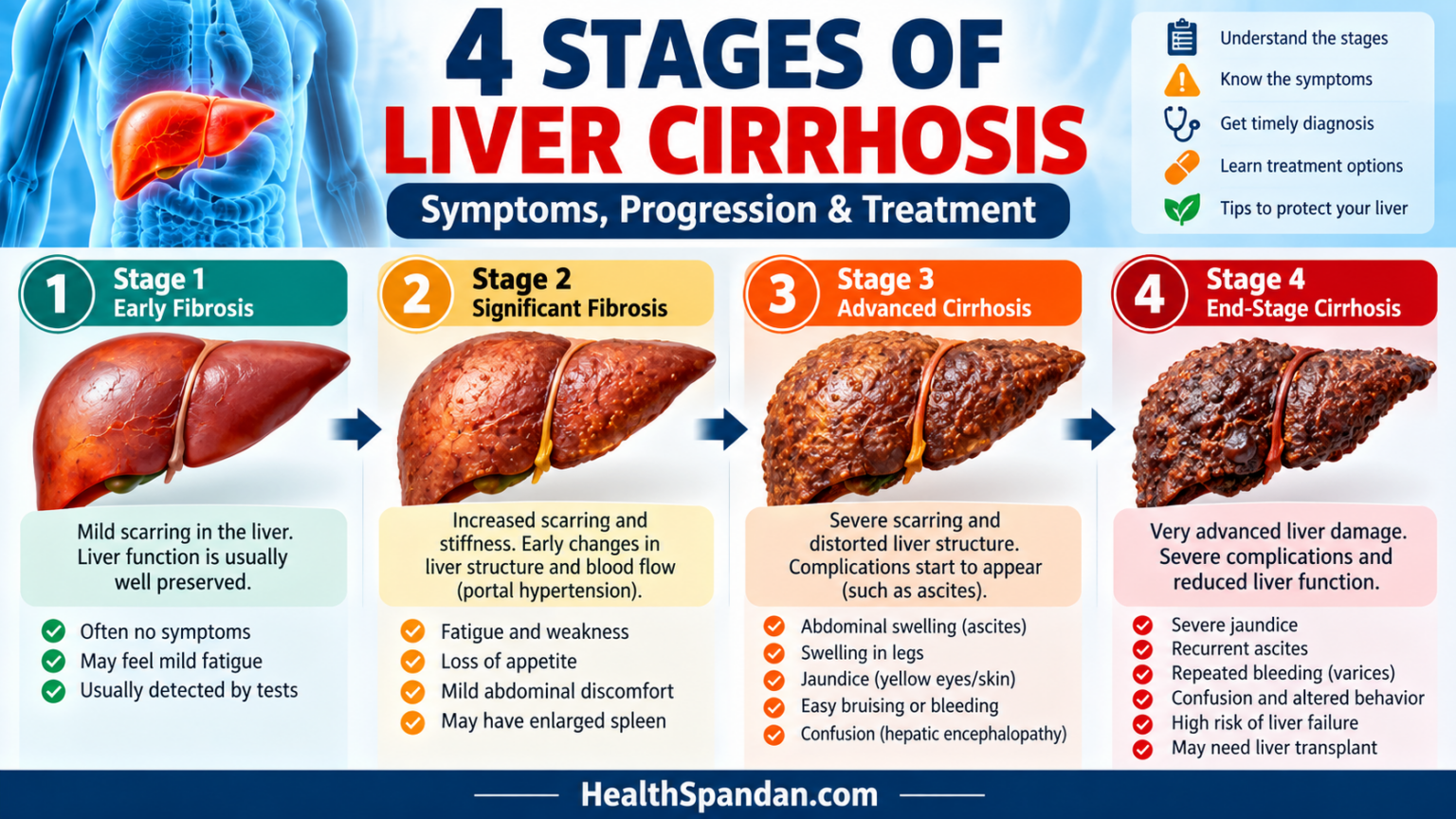
There is no single four-stage system used for every patient. A commonly used clinical description divides cirrhosis into four stages according to complications: the first two are generally called compensated cirrhosis, while the later stages involve decompensation. Doctors also use scoring systems such as Child-Pugh and MELD to estimate severity and guide care. The stages below are a simplified educational overview, not a way to diagnose yourself.
Stage 1: Cirrhosis without varices or ascites
At this early stage, scar tissue is present, but there may be no enlarged veins (varices) and no fluid build-up in the abdomen (ascites). Many people feel well and may not notice symptoms. Blood tests or imaging performed for another reason may reveal a liver problem.
What may help: identify and treat the cause, such as hepatitis B or C, alcohol-related liver disease, or metabolic fatty liver disease. Avoid alcohol, review medicines and supplements with a clinician, and attend recommended follow-up appointments.
Stage 2: Cirrhosis with varices, but no ascites
Pressure in the portal vein may rise (portal hypertension), causing enlarged veins in the food pipe or stomach. These are called varices. They may not cause symptoms until they bleed, so a clinician may recommend endoscopy or preventive treatment based on individual risk. Fluid has not yet accumulated in the abdomen in this simplified staging model.
Warning sign: vomiting blood or passing black, tarry stools can indicate internal bleeding and requires emergency medical care.
Stage 3: Cirrhosis with ascites
Ascites means fluid collects in the abdomen, causing swelling, tightness, discomfort or rapid weight gain. Leg or ankle swelling may also occur. New abdominal fluid needs prompt medical assessment because infection and kidney problems can develop. Clinicians may recommend a lower-sodium eating plan, prescribed diuretics, or drainage of fluid when appropriate. Do not start water tablets or severely restrict fluids without medical advice.
Stage 4: Cirrhosis with serious complications, such as variceal bleeding
This stage represents advanced, decompensated disease in the simplified four-stage model. Complications can include bleeding from varices, worsening ascites, jaundice, hepatic encephalopathy (confusion or unusual sleepiness), kidney dysfunction or serious infections. More than one complication may occur, and the exact course varies from person to person.
Seek emergency care immediately for vomiting blood, black or bloody stools, new confusion, extreme drowsiness, fainting, breathing difficulty, or fever with abdominal swelling. Advanced disease may require specialist management and assessment for liver transplantation.
Compensated vs. decompensated cirrhosis
Compensated cirrhosis means the liver is still managing many essential functions and major complications have not appeared. People may have no symptoms. Decompensated cirrhosis means complications such as ascites, hepatic encephalopathy or variceal bleeding have developed. This change is clinically important and usually calls for closer specialist care. A person’s stage cannot be determined from symptoms alone.
Common causes and risk factors
- Long-term hepatitis B or hepatitis C infection.
- Alcohol-related liver disease.
- Metabolic dysfunction-associated steatotic liver disease, often associated with obesity, diabetes or other metabolic risk factors.
- Autoimmune, inherited or bile-duct diseases and some medicines or toxins.
Symptoms to watch for
Early cirrhosis may cause no noticeable symptoms. Possible symptoms include tiredness, reduced appetite, nausea, itchy skin, unexplained weight loss or discomfort in the upper-right abdomen. As disease progresses, symptoms may include yellow skin or eyes (jaundice), swollen legs, abdominal fluid, easy bruising, dark urine, muscle loss, confusion or gastrointestinal bleeding. These symptoms can have other causes too, so medical assessment is important.
How is cirrhosis diagnosed?
A clinician may review medical history and medicines, examine the abdomen and skin, and order blood tests such as liver enzymes, bilirubin, albumin, blood count and clotting tests. Ultrasound or other imaging, liver stiffness measurement (elastography), tests for hepatitis, and sometimes liver biopsy may be used. Endoscopy may be recommended to look for varices. Child-Pugh and MELD scores use clinical and laboratory information to help assess severity; a single scan or liver enzyme result does not tell the whole story. See the NIDDK guide to cirrhosis diagnosis.
Treatment and daily care
Established cirrhosis scarring is often permanent, but treating the cause and managing complications can slow progression and improve outcomes. Treatment depends on the underlying cause and the patient’s condition.
- Avoid alcohol completely if you have cirrhosis.
- Ask your clinician about treatment for hepatitis B or C and management of diabetes, weight and other metabolic risks.
- Do not start, stop or increase prescription medicines, over-the-counter painkillers, herbal products or supplements without checking with your healthcare professional.
- Follow an individualized nutrition plan. Many people need adequate calories and protein; sodium restriction may be advised if fluid retention occurs. Do not impose severe dietary restrictions on your own.
- Keep follow-up appointments. Your care team may recommend monitoring for liver cancer, screening for varices, and vaccinations appropriate to your health status.
- Ask a liver specialist whether you need transplant evaluation if complications or liver failure develop.
For more details, read the NIDDK information on cirrhosis treatment.
Frequently asked questions
Can liver cirrhosis be cured?
Scarring from established cirrhosis is generally not fully reversible. However, treating the cause can slow or sometimes halt further damage, and treatment can control complications. Some underlying conditions are treatable, so early medical care matters.
Does every person pass through all four stages?
No. Progression varies. Some people remain stable for years, while others develop complications. The simplified four-stage model is not a precise timetable or an individual prognosis.
Is Stage 4 cirrhosis an emergency?
Stage 4 indicates serious disease in this simplified model. Symptoms such as vomiting blood, black stools, new confusion, fainting, or fever with abdominal swelling require emergency care. Even without these symptoms, advanced cirrhosis needs specialist follow-up.
Which tests show the stage?
Doctors combine examination, blood tests, imaging, endoscopy when indicated, and scores such as Child-Pugh or MELD. Ask your treating clinician to explain what your results mean together.
Liver cirrhosis in India: what can help
In India, long-term hepatitis B and C infection, alcohol use and fatty liver disease linked to diabetes and obesity are important causes of cirrhosis. Under the National Viral Hepatitis Control Programme (NVHCP), testing and treatment for hepatitis B and C are offered free of charge at designated government health facilities. Hepatitis B vaccine is part of the routine childhood schedule under the Universal Immunization Programme, and adults at risk can ask their doctor about vaccination. If you have risk factors, ask at your nearest Ayushman Arogya Mandir, PHC or district hospital about liver function and hepatitis tests.
हिंदी में सार: लिवर सिरोसिस में लिवर का स्वस्थ हिस्सा धीरे-धीरे कठोर निशान (scar) में बदल जाता है। शुरुआत में लक्षण नहीं दिखते, इसलिए जोखिम हो तो जाँच कराएँ। शराब पूरी तरह छोड़ें, हेपेटाइटिस B/C की जाँच कराएँ और खून की उल्टी, काला मल, बेहोशी या पेट में सूजन हो तो तुरंत अस्पताल जाएँ।
Key takeaway
The four-stage explanation is a useful starting point: no major complications, varices without ascites, ascites, and then serious complications such as bleeding. However, cirrhosis staging systems differ, and the patient’s full clinical picture matters. Early diagnosis, treating the cause, avoiding alcohol, and consistent specialist care can make a meaningful difference.
Sources
- NIDDK — Cirrhosis
- National Viral Hepatitis Control Programme — Ministry of Health & Family Welfare, India
- WHO — Hepatitis B fact sheet
Medical disclaimer: This article is for general education only and does not provide individual medical advice. If you have known or suspected cirrhosis, contact a qualified healthcare professional. Seek emergency care for signs of gastrointestinal bleeding, new confusion or other severe symptoms.
